
 E-Paper



After partial repeal of Afspa, North-East hopes for a new era of peace
Chief Ministers of the northeastern states and human rights activists welcomed the Union government's decision.


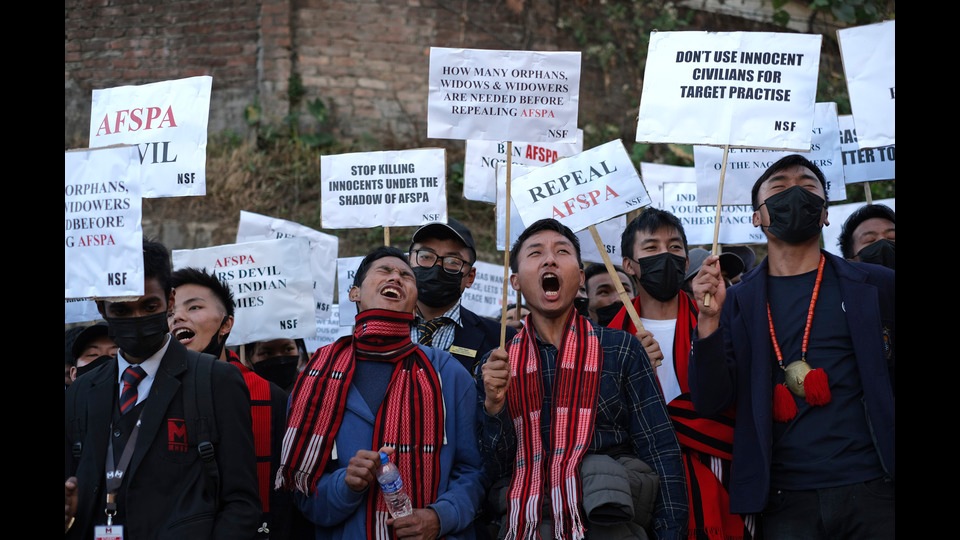
Chief ministers across northeastern states on Thursday hailed the Centre’s decision to remove the Armed Forces Special Powers Act (Afspa) from large swathes of Assam, Nagaland and Manipur, terming it “a new era of peace”. Human rights activists, too, welcomed the move but said they would continue to push for the complete repeal of the controversial legislation.
Also Read | Centre reduces Afspa spread in three states
AFSPA, which empowers security forces to conduct operations and arrest anyone without any prior warrant, was in force in Assam, Nagaland, Manipur (excluding Imphal Municipal Council Area), Changlang, Longding and Tirap districts of Arunachal Pradesh, and areas falling within the jurisdiction of eight police stations of districts in Arunachal Pradesh bordering Assam. Several civil society groups and rights activists have been calling for the complete withdrawal of the law for its alleged “draconian” provisions.
Assam chief minister Himanta Biswa Sarma said that the decision to withdraw AFSPA from 23 districts now meant that “around 60%” of the state will now not be under the purview of the Act. “I wholeheartedly welcome PM Narendra Modiji’s decision to withdraw AFSPA from all areas of Assam, barring 9 districts and 1 sub-division. Also, convey my gratitude to HM Amit Shahji for this great move,” he said.
Also Read | Assam to withdraw AFSPA from most areas tonight, says CM Himanta Biswa Sarma
AFSPA has been in force in the state since 1990 and this move marks the beginning of a new chapter in Assam’s future, Sarma added.
Manipur chief minister N Biren Singh, too, termed the decision a result of robust development and the improved security situation in the northeast under the leadership of Prime Minister Narendra Modi. “This decision will lead to a new era of peace, prosperity and development in Manipur again,” Singh said.
In Manipur, where the disturbed area declaration was in force (except Imphal Municipality area) since 2004, the Centre decided to remove AFSPA from 15 police station areas of six districts.
In Nagaland, where the disturbed area notification was in force since 1995, AFS[A will be removed from 15 police stations. The demands for the withdrawal of AFSPA from the region were renewed in December last year after the killings of 14 people in a botched operation in Nagaland’s Mon.
“Grateful to GoI under the leadership of @PMOIndia Shri @narendramodi ji & @AmitShah ji for reducing disturbed areas under AFSPA in the states of Nagaland, Assam & Manipur. This is a significant development towards bringing stability, security & prosperity to the North East region,” chief minister Neiphiu Rio tweeted.
Mizoram chief minister Zoramthanga, who heads the Mizo National Front, hailed the decision as a wise step of a government that “truly cares about the developmental welfare of its own people”.
“May this humane virtue of peace be a torch-bearing usher for countless prosperity to the North-Eastern region,” he said.
Conrad Sangma, Meghalaya’s chief minister, also welcomed the move and said it would leave to a positive message to the people of the region. “We have been always stressing that AFSPA is an act gone beyond its time and is something that is not really achieving the objective it was meant to,” said Sangma.
Arunachal Pradesh chief minister Pema Khandu called the move “a very honest and sincere attempt at doing something different…We all stand solidly in support of this strong decision”.
Activists from the region termed it a good beginning but said they would continue to demand the complete repeal of Afspa. “This is definitely a step in the right direction. But this is not the end of our struggle and we will continue to fight for the complete repeal of AFSPA. That’s the only way India can claim to be a true democracy. This was long overdue but better late than never,” said Imphal-based Babloo Loitongbam, executive director of Human Rights Alert, an NGO.
Neingulo Krome of the Naga People’s Movement for Human Rights said that “mere appeasement policies” will not help. “It is good to know there is a relaxation of some sort. But mere appeasement policies do not help. Just too much under this law has happened which is beyond words,” Krome said.
Dr Rosemary Dzuvichu, adviser of the Naga Mothers Association, said that there should be nothing short of a complete repeal from the region. “This draconian law violates every form of human rights and can never be justified... The government of India should stop playing with Nagas and our sentiments. The demand is for the repeal of AFSPA, nothing less,” she said.


